It is quite difficult for me to tell you anything from my own solid memories without the influence of wishful thinking from the time before 1939. I have almost no exact memories from the time before that. It is a mixture of stories my parents, relatives and acquaintances of our family told, conclusions, and information from existing photo albums and documents that were not lost in the war (while fleeing back to Berlin and in days after the war).
After the war, our father tried to reconstruct our family tree – and failed after a few generations. The family tree, which according to his stories, goes back a long way – apparently as Aryan proof in the Nazi era, among other things – was lost in the last days of the war, together with all the collected documents. They were in a safe of the Dresdner Bank Berlin at the Schiffbauerdamm. The Russians wanted to get into the safes and tried to blow up the walls. In the process, they caught the wall to the Spree river flowing next to the building. Everything drowned and stayed under water for a long time until the embankment walls were sealed again. Nevertheless, the Russians managed to get hold of all other stored valuables, especially jewellery.
Everything else has been irretrievably destroyed. Only a badly damaged, barely legible document was “saved”, though. Our father showed me that document. On parchment or leather, – I don’t remember – badly worn but still recognisable in my memory as a land assignment in ornate script sometime from the 16th century to a Hühner in the Swedish military service – whether in the middle with an “h” or without, I can’t say anymore, at least without an “r” at the end. Our current name is said to have originated from excessive writing decorations with comprehensible proof in those lost documents. Well, the documents in question are gone, and it is left to everyone’s interpretation.
There is also word of a “pig baroness”. During a visit to Pomerania, that part I clearly remember, we were also on an estate, obviously with pig farming, and I remember an encounter with an elderly woman in boots she constantly smacked with her riding crop who shouted around a lot.
How exciting, but what remains? We are a mixture of people from German-speaking areas.
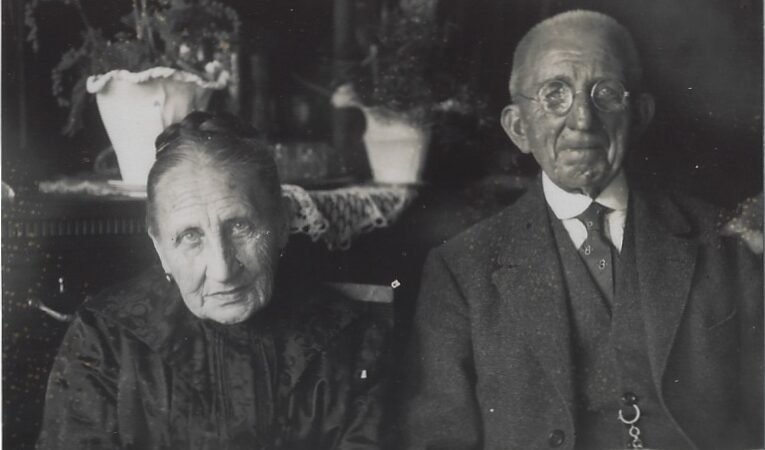
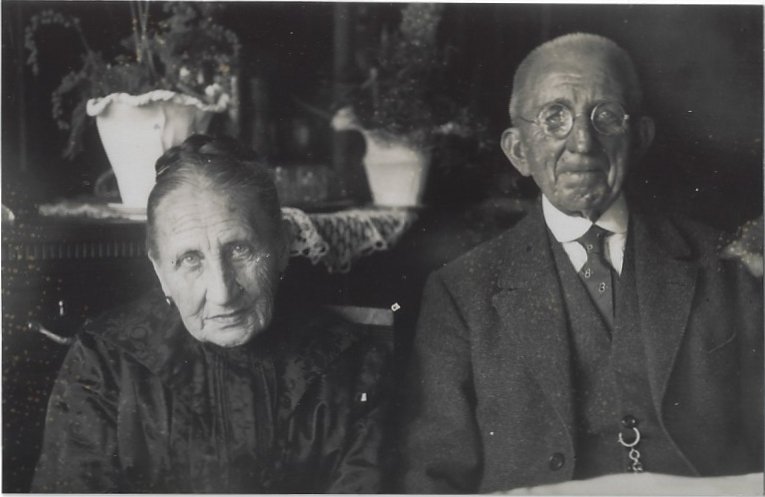
On the mother’s side, who was born in Berlin, the family is originally from Franconia in Bavaria. My great-grandparents – already 100 years old – were still alive when I was born, and I was presented to them as an infant. All the older sons of the maternal family died in the war. One died as a tank officer in Kurland, another went missing on the Baltic Sea as a naval officer for speedboats while trying to evacuate as many soldiers as possible from the besieged Kurland. I experienced the fate of the other two sons from Bayreuth first-hand and still remember it that way. The older one, Hans, was my idol back then as a first lieutenant. I couldn’t hear enough about his “heroic deeds” in the Polish and French campaigns or our – I was already a “Pimpf” in the Hitler Youth at the time – high-spirited appearance in Berlin with a goose step through the Brandenburg Gate. Eventually, though, reality caught up with me.
I knew from hearsay that the news of an officer’s death was delivered by two officers at that time, who then stood at the door with that horrible message. This was the day on which the news was delivered for Hans. In France, which was already occupied, he had been fatally injured by a British low-flying aircraft while riding his bike – he was an enthusiastic motorcyclist. Then came the death of brother Paul by a bomb in Poznan. This affected the aunt’s health to such an extent that our mother and we children had to cut our stay in Bayreuth short. We learned of the uncle’s death after the end of the war. He had obviously been active in the administration as a member of the NSDAP in a senior position. After the war, he was then used to clear war damage and probably deliberately placed himself under a collapsing wall.
My grandfather was – together with his brother – an enthusiastic hunter. The memory of him is that he taught me everything about the behaviour of game, but also how to slaughter and gut the animals. He was earthbound and knowledgeable about plants, herbs and their uses. Those hung around dry everywhere in the house as spice, medicinal herbs or for use as tea. He tried to pass on that knowledge to me, but nothing stuck. He liked to sit on an ancient sofa with a backrest far above his head and drink his coffee from the saucer. That was always a funny ceremony for me. He did not use a normal cup. It was a coffee pot, which is no longer common and used today. The same was true for the saucer. It had a huge diameter and a high rim. The hot coffee was poured from the cup – the pot – into the saucer in a ceremonial way and drunk from the saucer after it had cooled down. I was never allowed to try it with him, and at home, it was certainly out of the question to try something like that.
My father’s family probably came from Pomerania. The family is said to have lived there for generations. We never had contact with our grandfather. I never met him and only heard his voice once on the phone, but I immediately passed it to our father. He had probably left the “little grandma” very early with her three children. With this, our father broke off all contact and did not respond to his father’s attempt in the said conversation. He simply hung up the phone.
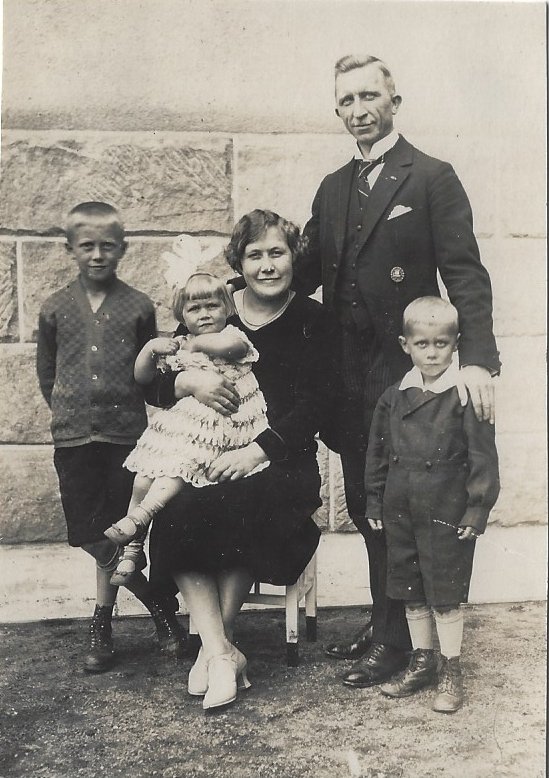
Our father also had two siblings – Margarethe and Walter. Aunt Grete was married to Uncle Emil. They died childless but were with our family a lot. Uncle Emil, in particular, was always a sociable and fun person to have in the house. The brother was married to Aunt Lilly, but they then emigrated to Canada with their children.
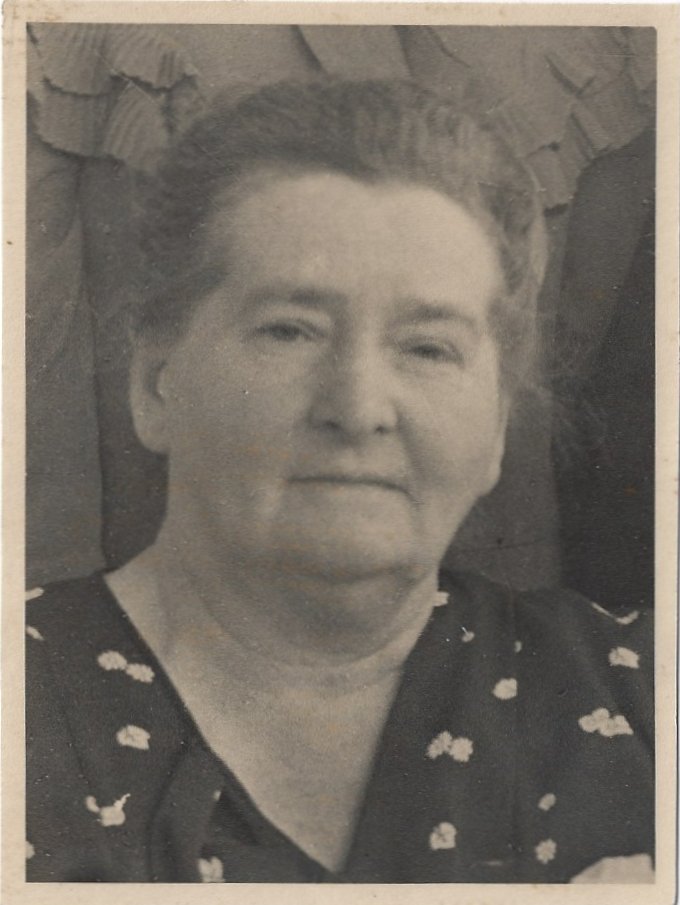
Our “little grandma” lived in Berlin and was practically part of the family. She stayed with us most of the time and even came with us on vacation. She was the first dead person I saw at the beginning of the war.